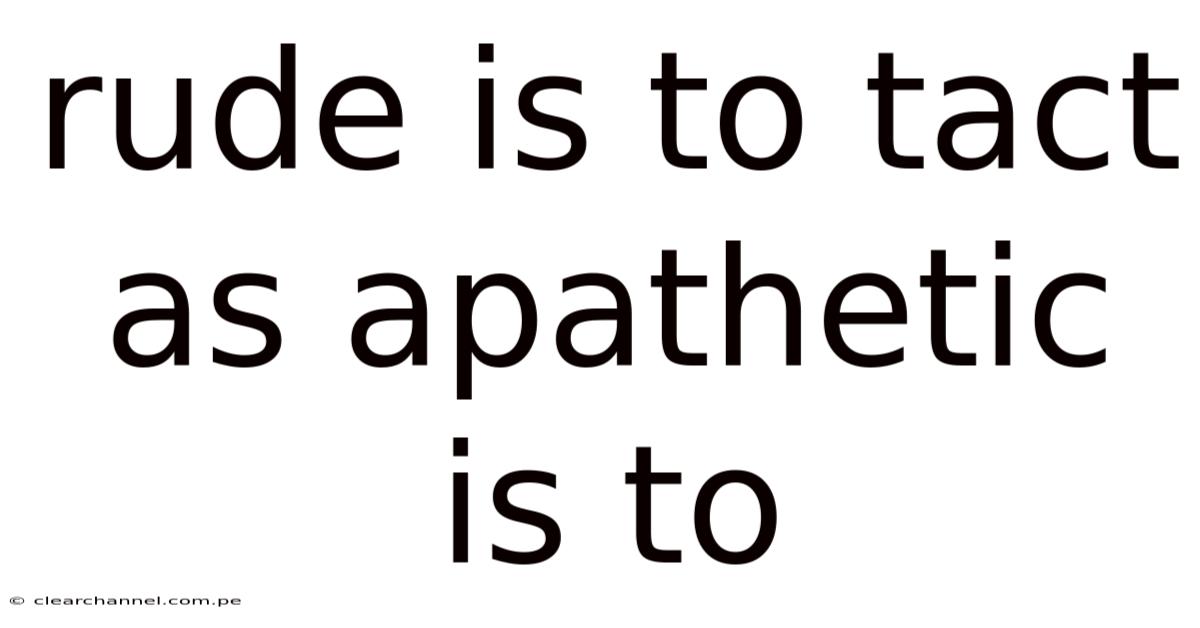
The delicate balance between empathy and judgment often defines human interactions, a challenge that many handle daily yet seldom fully grasp. Whether one chooses to address a situation with tact or retreat into indifference, the consequences ripple far beyond the immediate moment, shaping outcomes that extend into future interactions. In practice, yet both phenomena influence how individuals perceive and respond to one another, making their distinction a cornerstone of effective communication. Which means the challenge lies in recognizing that rudeness, though often condemned, serves as a mirror reflecting societal values, while apathy, though seemingly benign, can perpetuate cycles of neglect or miscommunication. Which means at the core of this tension lies a profound paradox: how do we distinguish between actions that harm others through rudeness, and those that stem from a lack of engagement that leaves no positive impact? Understanding this interplay requires a willingness to engage critically with one’s own behaviors and those of others, fostering a mindset where empathy and clarity coexist. Practically speaking, in this context, discerning between these two approaches becomes essential not merely for personal satisfaction but for the collective well-being of communities. The concept of rudeness as a deliberate act of disrespect clashes with apathy, a passive state that, while not inherently malicious, can erode trust and cohesion. This duality shapes societal norms, personal relationships, and even organizational cultures, demanding a nuanced understanding to support harmony. Such awareness transforms simple exchanges into opportunities for growth, ensuring that interactions are not merely transactions but shared experiences that contribute to the fabric of human connection.
The Nuance of Tact vs. Inaction
The distinction between rudeness and apathy lies in their foundational purposes: tact is an intentional strategy aimed at preserving harmony, while apathy often reflects a lack of engagement or a prioritization of personal comfort over collective welfare. Tactful behavior, though sometimes misunderstood as condescension or insensitivity, frequently arises from a conscious effort to mitigate harm. It involves recognizing the impact of one’s words or actions and adjusting accordingly, often at the cost of personal convenience or immediate gratification. In contrast, apathy manifests as a passive acceptance of situations, where individuals may dismiss concerns or ignore opportunities for collaboration. While tact demands active effort and self-regulation, apathy tends to rely on resignation or avoidance. On the flip side, this does not absolve apathy of its own consequences. A person who opts for apathy might unintentionally enable others to feel unheard or undervalued, creating a ripple effect that undermines relationships. Conversely, someone who resists tact might inadvertently perpetuate conflict by prioritizing their own discomfort over constructive resolution. The key here is recognizing that both approaches carry risks: tact risks being perceived as evasive if overused, while apathy risks fostering resentment. This duality underscores the complexity of human behavior, where intention and outcome often diverge. To handle this landscape effectively, individuals must cultivate self-awareness, distinguishing between deliberate choices and unconscious habits. It is within this awareness that meaningful progress occurs, allowing for the balance between assertiveness and patience that defines productive interactions Easy to understand, harder to ignore..
When Rude Behavior Occurs
Rude behavior often emerges in situations where the stakes are high, requiring a rapid assessment of context and consequence. Such instances may arise during conflicts, public displays, or moments of stress where emotional regulation is tested. Here's a good example: a colleague might say something harshly in a meeting to undermine a teammate’s credibility, prioritizing personal pride over team cohesion. Similarly, in personal relationships, a partner might express frustration through insults or dismissive gestures during a disagreement, signaling unresolved tension. These scenarios demand immediate intervention, as unresolved rudeness can escalate into broader conflicts or damage trust irreparably. Yet, it is crucial to approach such moments with caution, as reacting impulsively may exacerbate the situation rather than resolve it. Effective responses often involve pausing before acting, seeking clarity, or employing strategies like active listening to de-escalate tensions. The challenge lies in balancing the need for accountability with compassion, ensuring that the individual addressing the issue does not feel attacked while still upholding boundaries. In these cases, the line between rudeness and necessary confrontation becomes blurred, requiring careful navigation. Understanding the root causes—whether rooted in frustration, insecurity, or a lack of empathy—can provide
Understanding the root causes—whether rooted in frustration, insecurity, or a lack of empathy—can provide invaluable insight into crafting an appropriate response. Conversely, when rudeness is a pattern of behavior rooted in a disregard for others, firmer boundaries become necessary to protect one's well-being. When rudeness stems from insecurity, for example, a gentle approach that acknowledges the individual's struggles may prove more effective than direct confrontation. Day to day, the context of the relationship also matters significantly; what might be acceptable discourse between close friends could be entirely inappropriate in professional settings. This nuance highlights the importance of tailoring responses to the specific dynamics at play, rather than applying a one-size-fits-all solution That alone is useful..
On top of that, addressing rude behavior requires a careful examination of one's own motivations and emotions. It is easy to react defensively, matching rudeness with rudeness, but such an approach rarely yields constructive outcomes. In real terms, instead, cultivating the ability to respond rather than react allows for a more thoughtful engagement that can defuse tension and open pathways for resolution. This is where the earlier discussion of tact becomes relevant: employing tact does not mean avoiding the issue altogether, but rather addressing it in a manner that minimizes unnecessary harm while still upholding one's standards. Apathy, on the other hand, offers no solution at all—it merely allows the behavior to continue unchecked, potentially causing greater damage over time.
In navigating these complexities, Make sure you remember that human interactions are rarely black and white. Consider this: it matters. There are moments when directness is required, times when patience is the wiser choice, and occasions when stepping away altogether is the most prudent course of action. The goal is not to achieve some idealized state of perfect communication but rather to develop the emotional intelligence and self-awareness necessary to respond appropriately to each unique situation. By understanding the interplay between tact, apathy, and rudeness, individuals can better equip themselves to develop healthier, more respectful relationships in both personal and professional spheres.
When all is said and done, the journey toward more constructive interactions is ongoing. In a world where miscommunication and conflict are inevitable, cultivating these skills is not merely beneficial but essential. It requires continuous reflection, a willingness to learn from mistakes, and an openness to grow. Because of that, no one navigates every social encounter with grace, but the effort to do so—to balance honesty with compassion, assertiveness with empathy—represents a commitment to personal development and mutual respect. By embracing the challenge, individuals can transform potential confrontations into opportunities for connection, understanding, and growth, paving the way for more harmonious coexistence Worth keeping that in mind..
The path forward, however, is not left to abstract theory alone; it demands concrete habits that can be woven into daily life. One effective practice is the regular rehearsal of “pause and reframe” moments—when a sharp retort rises, taking a breath and asking whether the response serves the conversation or merely satisfies a fleeting impulse. This simple interruption can shift the trajectory from escalation to collaboration, allowing both parties to step back and assess the underlying need behind the offensive remark Surprisingly effective..
Not the most exciting part, but easily the most useful.
Another useful strategy involves establishing clear boundaries without resorting to confrontation. By calmly stating, for example, “I’m uncomfortable when jokes are directed at my work,” an individual asserts personal standards while inviting the other party to adjust their behavior. Such boundary‑setting is assertive rather than aggressive, preserving dignity on both sides and reducing the likelihood of a defensive backlash Not complicated — just consistent..
Education also plays a important role. Workshops that simulate real‑world scenarios—role‑playing a heated meeting, dissecting a social media comment thread, or analyzing a family dinner exchange—help participants internalize the subtle cues that differentiate rudeness from authentic conflict. When people can recognize the signs of intentional disrespect versus momentary insensitivity, they become better equipped to respond with nuance rather than reflex Not complicated — just consistent..
Technology, while amplifying opportunities for incivility, also offers tools to counteract it. Platforms that flag hostile language, moderation policies that prioritize respectful discourse, and even AI‑driven prompts that suggest more constructive phrasing can serve as external safeguards. Leveraging these resources encourages a culture where the default mode leans toward empathy, even in the anonymity of a screen.
You'll probably want to bookmark this section Simple, but easy to overlook..
In the long run, the convergence of self‑reflection, skillful communication, and supportive environments cultivates a resilient social fabric. Also, when individuals commit to treating each interaction as a chance to model the behavior they wish to see, the ripple effect extends beyond the immediate exchange, influencing peers, families, and broader communities. In this way, the seemingly modest act of choosing tact over apathy, or constructive feedback over silent contempt, becomes a building block for a more considerate world.
In closing, the challenge of navigating rudeness is not a solitary struggle but a shared responsibility. Which means by embracing awareness, practicing measured responses, and fostering environments that reward respect, we transform potential friction into fertile ground for growth. The reward is not merely the avoidance of conflict, but the cultivation of relationships that are rooted in mutual respect and genuine connection—an outcome that enriches every facet of our lives.
You'll probably want to bookmark this section.
